From http://www.panarchy.org/freud/war.1915.html.
Note: In this essay, written about six months after the outbreak of the First World War, Freud expresses his disillusionment about human nature and the supreme institution of the civilized world, namely the state. The words describing the state and its monopoly of violence are powerful and right to the point. The analysis of the human being, as prone to violence because of bad primitive instinct (the state of nature) against which civilization has not yet triumphed, is not really convincing. It does not explain, for instance, why many conscripts, coming from humble rural occupations, away from the centres of civilization represented by the capital city, had to be forced to fight and had to be punished whenever they fraternized with the so-called enemy. In this respect, the explanation of the historian A. J. P. Taylor sounds closer to the truth: " In the state of nature which Hobbes imagined, violence was the only law, and life was 'nasty, brutish and short'. Though individuals never lived in this state of nature, the Great Powers of Europe have always done so." (A. J. P. Taylor, The Struggle for Mastery in Europe 1848-1918)
THE DISILLUSIONMENT OF THE WAR
In the confusion of wartime in which we are caught up, relying as we must on one-sided information, standing too close to the great changes that have already taken place or are beginning to, and without a glimmering of the future that is being shaped, we ourselves are at a loss as to the significance of the impressions which bear down upon us and as to the value of the judgements which we form. We cannot but feel that no event has ever destroyed so much that is precious in the common possessions of humanity, confused so many of the clearest intelligences, or so thoroughly debased what is highest. Science herself has lost her passionless impartiality; her deeply embittered servants seek for weapons from her with which to contribute towards the struggle with the enemy. Anthropologists feel driven to declare that enemy inferior and degenerate, psychiatrists issue a diagnosis of his disease of mind or spirit. Probably, however, our sense of these immediate evils is disproportionately strong, and we are not entitled to compare them with the evils of other times which we have not experienced.
The individual who is not himself a combatant - and so is a cog in the gigantic machine of war - feels bewildered in his orientation, and inhibited in his powers and activities. I believe that he will welcome any indication, however slight, which will make it easier for him to find his bearings within himself at least. I propose to pick out two among the factors which are responsible for the mental distress felt by non-combatants, against which it is such a heavy task to struggle, and to treat of them: the disillusionment which this war has evoked, and the altered attitude towards death which this - like every other war - forces upon us.
When I speak of disillusionment, everyone will know at once what I mean. One need not be a sentimentalist; one may perceive the biological and psychological necessity for suffering in the economy of human life, and yet condemn war both in its means and ends and long for the cessation of all wars. We have told ourselves, no doubt, that wars can never cease so long as nations live under such widely differing conditions, so long as the value of individual life is so variously assessed among them, and so long as the animosities which divide them represent such powerful motive forces in the mind. We were prepared to find that wars between the primitive and the civilized people, between the races who are divided by the colour of their skin - wars, even, against and among the nationalities of Europe whose civilization is little developed or has been lost - would occupy mankind for some time to come. But we permitted ourselves to have other hopes. We had expected the great world-dominating nations of white race upon whom the leadership of the human species has fallen, who were known to have world-wide interests as their concern, to whose creative powers were due not only our technical advances towards the control of nature but the artistic and scientific standards of civilization - we had expected these people to succeed in discovering another way of settling misunderstandings and conflicts of interest. Within each of these nations there prevailed high norms of moral conduct for the individual, to which his manner of life was bound to conform if he desired to take part in a civilized community. These ordinances, often too stringent, demanded a great deal of him – much self-restraint, much renunciation of instinctual satisfaction. He was above all forbidden to make use of the immense advantages to be gained by the practice of lying and deception in the competition with his fellow-men. The civilized states regarded these moral standards as the basis of their existence. They took serious steps if anyone ventured to tamper with them, and often declared it improper even to subject them to examination by a critical intelligence. It was to be assumed, therefore, that the state itself would respect those moral standards, and would not think of undertaking anything against them which would contradict the basis of its own existence. Observation showed, to be sure, that embedded in these civilized states there were remnants of certain other people, which were universally unpopular and had therefore been only reluctantly, and even so not fully, admitted to participation in the common task of civilization, for which they had shown themselves suitable enough. But the great nations themselves, it might have been supposed, would have acquired so much comprehension of what they had in common, and so much tolerance for their differences, that 'foreigner' and 'enemy' could no longer be merged, as they still were in classical antiquity, into a single concept.
Relying on this unity among the civilized people, countless men and women have exchanged their native home for a foreign one, and made their existence dependent on the intercommunication between friendly nations. Moreover anyone who was not by stress of circumstance confined to one spot could create for himself out of all the advantages and attractions of these civilized countries a new and wider fatherland, in which he would move about without hindrance or suspicion. In this way he enjoyed the blue sea and the grey; the beauty of snow-covered mountains and of green meadow lands; the magic of northern forests and the splendour of southern vegetation; the mood evoked by landscapes that recall great historical events, and the silence of untouched nature. This new fatherland was a museum for him, too, filled with all the treasures which the artists of civilized humanity had in the successive centuries created and left behind. As he wandered from one gallery to another in this museum, he could recognize with impartial appreciation what varied types of perfection a mixture of blood, the course of history, and the special quality of their mother-earth had produced among his compatriots in this wider sense. Here he would find cool, inflexible energy developed to the highest point; there, the graceful art of beautifying existence; elsewhere, the feeling for orderliness and law, or others among the qualities which have made mankind the lords of the earth.
Nor must we forget that each of these inhabitants of the civilized world had created for himself a 'Parnassus' and' a 'School of Athens' of his own. From among the great thinkers, writers and artists of all nations he had chosen those to whom he considered he owed the best of what he had been able to achieve in enjoyment and understanding of life, and he had venerated them along with the immortal ancients as well as with the familiar masters of his own tongue. None of these great figures had seemed to him foreign because they spoke another language - neither the incomparable explorer of human passions, nor the intoxicated worshipper of beauty, nor the powerful and menacing prophet, nor the subtle satirist; and he never reproached himself on that account for being a renegade towards his own nation and his beloved mother-tongue.
The enjoyment of this common civilization was disturbed from time to time by warning voices, which declared that old traditional differences made wars inevitable, even among the members of a community such as this. We refused to believe it; but if such a war were to happen, how did we picture it? We saw it as an opportunity for demonstrating the progress of comity among human beings since the era when the Greek Amphictyonic Council proclaimed that no city of the league might be destroyed, nor its olive-groves cut down, nor its water-supply stopped; we pictured it as a chivalrous passage of arms, which would limit itself to establishing the superiority of one side in the struggle, while as far as possible avoiding acute suffering that could contribute nothing to the decision, and granting complete immunity for the wounded who had to withdraw from the contest, as well as for the doctors and nurses who devoted themselves to their recovery. There would, of course be the utmost consideration for the non-combatant classes of the population - for women who take no part in war-work, and the children who, when they are grown up, should become on both sides one another's friends and helpers. And again, all the international undertakings and institutions in which the common civilization of peace-time had been embodied would be maintained.
Even a war like this would have produced enough horror and suffering; but it would not have interrupted the development of ethical relations between the collective units of mankind - the peoples and the states.
Then the war in which we had refused to believe broke out, and it brought -disillusionment. Not only is it more bloody and more destructive than any war of other days, because of the enormously increased perfection of weapons of attack and defence; it is at least as cruel, as embittered, as implacable as any that has preceded it. It disregards all the restrictions known as International Law, which in peace-time the states had bound themselves to observe; it ignores the prerogatives of the wounded and the medical service, the distinction between civil and military sections of the population, the claims of private property. It tramples in blind fury on all that comes in its way as though there were to be no future and no peace among men after it is over. It cuts all the common bonds between the contending peoples, and threatens to leave a legacy of embitterment that will make any renewal of those bonds impossible for a long time to come.
Moreover, it has brought to light an almost incredible phenomenon: the civilized nations know and understand one another so little that one can turn against the other with hate and loathing. Indeed, one of the great civilized nations is so universally unpopular that the attempt can actually be made to exclude it from the civilized community as 'barbaric', although it bas long proved its fitness by the magnificent contributions to that community which it has made. We live in hopes that the pages of an impartial history will prove that that nation, in whose language we write and for whose victory our dear ones are fighting, has been precisely the one which has least transgressed the laws of civilization. But at such a time who dares to set himself up as judge in his own cause?
People are more or less represented by the states which they form, and these states by the governments which rule them. The individual citizen can with horror convince himself in this war of what would occasionally cross his mind in peace-time - that the state has forbidden to the individual the practice of wrong-doing, not because it desires to abolish it, but because it wants to monopolize it, like salt and tobacco. A belligerent state permits itself every such misdeed, every such act of violence, as would disgrace the individual. It makes use against the enemy not only of the accepted stratagems of war, but of deliberate lying and deception as well - and to a degree which seems to exceed the usage of former wars. The state exacts the utmost degree of obedience and sacrifice from its citizens, but at the same time it treats them like children by maintaining an excess of secrecy and a censorship upon news and expressions of opinion which leaves the spirits of those whose intellects it thus suppresses defenceless against every unfavourable turn of events and every sinister rumour. It absolves itself from the guarantees and treaties by which it was bound to other states, and makes unabashed confession of its own rapacity and lust for power, which the private individual has then to sanction in the name of patriotism.
It should not be objected that the state cannot refrain from wrong-doing, since that would place it at a disadvantage. It is no less disadvantageous, as a general rule, for the individual to conform to the standards of morality and refrain from brutal and arbitrary conduct; and the state seldom proves able to indemnify him for the sacrifices it exacts. Nor should it be a matter for surprise that this relaxation of all the moral ties between the collective beings of mankind should have had repercussions on the morality of individuals; for our conscience is not the inflexible judge that ethical teachers declare it, but in its origin is dread of the community and nothing else. When the community no longer raises objections, there is an end, too, to the suppression of evil passions, and people perpetrate deeds of cruelty, fraud, treachery and barbarity so incompatible with their level of civilization that one would have thought them impossible.
Well may the citizen of the civilized world of whom I have spoken stand helpless in a world that has grown strange to him - his great fatherland disintegrated, its common estates laid waste, his fellow-citizens divided and debased!
There is something to be said, however, in criticism of his disappointment. Strictly speaking it is not justified, for it consists in the destruction of an illusion. We welcome illusions because they spare us emotional distress, and enable us instead to indulge in gratification. We must not complain, then, if now and again they come into collision with some portion of reality and are shattered against it.
Two things in this war have aroused our sense of disillusionment: the low morality shown externally by states which in their internal relations pose as the guardians of moral standards, and the brutality shown by individuals whom, as participants in the highest human civilization, one would not have thought capable of such behaviour.
Let us begin with the second point and try to formulate, in a few brief words, the point of view that we wish to criticize. How, in point of fact, do we imagine the process by which an individual rises to a comparatively high plane of morality? The first answer will no doubt simply be that he is virtuous and noble from birth - from the very start. We shall not consider this view any further here. A second answer will suggest that we are concerned with a developmental process, and will probably assume that the development consists in eradicating his evil human tendencies and, under the influence of education and a civilized environment, replacing them by good ones. If so, it is nevertheless surprising that evil should re-emerge with such force in anyone who has been brought up in this way.
But this answer also contains the thesis from which we propose to dissent. In reality, there is no such thing as 'eradicating' evil tendencies. Psychological - or, more strictly speaking, psycho-analytic - investigation shows instead that the deepest essence of human nature consists of instinctual impulses which are of an elementary nature, which are similar in all men and which aim at the satisfaction of certain primal needs. These impulses in themselves are neither good nor bad. We classify them and their expressions in that way, according to their relation to the needs and demands of the human community. It must be granted that all the impulses which society condemns as evil - let us take as representative the selfish and the cruel ones - are of this primitive kind.
These primitive impulses undergo a lengthy process of development before they are allowed to become active in the adult. They are inhibited, directed towards other aims and fields, become commingled, alter their objects, and are to some extent turned back upon their possessor. Reaction-formations against certain instincts take the deceptive form of a change in their content, as though egoism had changed into altruism, or cruelty into pity. These reaction-formations are facilitated by the circumstance that some instinctual impulses make their appearance almost from the first in pairs of opposites - a very remarkable phenomenon, and one strange to the lay public, which is termed 'ambivalence of feeling'. The most easily observed and comprehensible instance of this is the fact that intense love and intense hatred are so often to be found together in the same person. Psycho-analysis adds that the two opposed feelings not infrequently have the same person for their object.
It is not until all these vicissitudes to which instinctual impulses are subject have been surmounted that what we call a person's character is formed, and this, as we know, can only very inadequately be classified as 'good' or 'bad'. A human being is seldom altogether good or bad; he is usually 'good' in one relation and 'bad' in another, or 'good' in certain external circumstances and in others decidedly 'bad'. It is interesting to find that the pre-existence of strong 'bad' impulses in infancy is often the actual condition for an unmistakable inclination towards 'good' in the adult. Those who as children have been the most pronounced egoists may well become the most helpful and self-sacrificing members of the community; most of our sentimentalists, friends of humanity and protectors of animals have been evolved from little sadists and animal-tormentors.
The transformation of 'bad' instincts is brought about by two co-operating factors, an internal and an external one. The internal factor consists in the influence exercised on the bad - let us say, the egoistic - instincts exercised by erotism, that is, by the human need for love, taken in its widest sense. By the admixture of erotic components the egoistic instincts are transformed into social ones. We learn to value being loved as an advantage for which we are willing to sacrifice other advantages. The external factor is the force exercised by upbringing, which represents the claims of our cultural environment, and this is continued later by the direct pressure of that environment. Civilization has been attained through the renunciation of instinctual satisfaction, and it demands the same renunciation from each newcomer in turn. Throughout an individual's life there is a constant replacement of external by internal compulsion. The influences of civilization cause an ever-increasing transformation of egoistic trends into altruistic and social ones by an admixture of erotic elements. In the last resort it may be assumed that every internal compulsion which makes itself felt in the development of human beings was originally - that is, in the history of mankind - only an external one. Those who are born to-day bring with them as an inherited organization some degree of tendency (disposition) towards the transformation of egoistic into social instincts, and this disposition is easily stimulated into bringing about that result. A further portion of this instinctual transformation has to be accomplished during the life of the individual himself. So the human being is subject not only to the pressure of his immediate cultural environment, but also to the influence of the cultural history of his ancestors.
If we give the name of adaptability to culture to an individual's personal capacity for the transformation of the egoistic impulses under the influence of erotism, we may further affirm that this adaptability is made up of two parts, one innate and the other acquired in the course of life, and that the relation of the two to each other and to that portion of the instinctual life which remains untransformed is a very variable one.
Generally speaking, we are apt to attach too much importance to the innate part of this adaptability, and in addition to this we run the risk of over-estimating the total adaptability to culture in comparison with the portion of instinctual life which has remained primitive - that is, we are misled into regarding human beings as 'better' than they actually are. For there is yet another element which obscures our judgement and falsifies the issue in too favourable a sense.
The instinctual impulses of other people are of course hidden from our observation. We infer them from their actions and behaviour, which we trace back to motives arising from their instinctual life. Such an inference is bound to be erroneous in many cases. This or that action which is 'good' from the cultural point of view may in one instance originate from a 'noble' motive, in another not. Ethical theorists class as 'good' actions only those which are the outcome of good impulses; to the others they refuse recognition. But society, which is practical in its aims, is not on the whole troubled by this distinction; it is content if a man regulates his behaviour and actions by the precepts of civilization, and is little concerned with his motives.
We have learned that the external compulsion exercised on a human being by his upbringing and environment produces a further transformation towards good in his instinctual life - a further turning from egoism towards altruism. But this is not the regular or necessary effect of the external compulsion. Upbringing and environment not only offer benefits in the way of love, but also employ other kinds of incentive, namely, rewards and punishments. In this way their effect may turn out to be that a person who is subjected to their influence will choose to behave well in the cultural sense of the phrase, although no ennoblement of instinct, no transformation of egoistic into altruistic inclinations, has taken place in him. The result will, roughly speaking, be the same; only a particular concatenation of circumstances will reveal that one man always acts in a good way because his instinctual inclinations compel him to, and the other is good only in so far and for so long as such cultural behaviour is advantageous for his own selfish purposes. But superficial acquaintance with an individual will not enable us distinguish between the two cases, and we are certainly misled by our optimism into grossly exaggerating the number of human beings who have been transformed in a cultural sense.
Civilized society, which demands good conduct and does not trouble itself about the instinctual basis of this conduct, has thus won over to obedience a great many people who are not in this following their own natures. Encouraged by this success, society has allowed itself to be misled into tightening the moral standard to the greatest possible degree, and it has thus forced its members into a yet greater estrangement from their instinctual disposition. They are consequently subject to an unceasing suppression of instinct, and the resulting tension betrays itself in the most remarkable phenomena of reaction and compensation. In the domain of sexuality, where such suppression is most difficult to carry out, the result is seen in the reactive phenomena of neurotic disorders. Elsewhere the pressure of civilization brings in its train no pathological results, it is true;
but is shown in malformations of character, and in the perpetual readiness of the inhibited instincts to break through to satisfaction at any suitable opportunity. Anyone thus compelled to act continually in accordance with precepts which are not the expression of his instinctual inclinations, is living, psychologically speaking, beyond his means, and may objectively be described as a hypocrite, whether he is clearly aware of the incongruity or not. It is undeniable that our contemporary civilization favours the production of this form of hypocrisy to an extraordinary extent. One might venture to say that it built up on such hypocrisy, and that it would have to submit to far-reaching modifications if people were to undertake to live in accordance with psychological truth. Thus there are very many more cultural hypocrites than truly civilized men - indeed, it is a debatable point whether a certain degree of cultural hypocrisy is not indispensable for the maintenance of civilization, because the adaptability to culture which has hitherto been organized in the minds of present-day human beings would perhaps not prove adequate for the task. On the other hand, the maintenance of civilization even on so dubious a basis offers the prospect of paving the way in each new generation for a more far-reaching transformation of instinct which shall be the vehicle of a better civilization.
We may already derive one consolation from this discussion: our mortification and our painful disillusionment on account of the uncivilized behaviour of our fellow-citizens of the world during this war were unjustified. They were based on an illusion to which we had given way. In reality our fellow-citizens have not sunk so low as we feared, because they had never risen so high as we believed. The fact that the collective units of mankind, the peoples and states, mutually abrogated their moral restraints naturally prompted these individual citizens to withdraw for a while from the constant pressure of civilization and to grant a temporary satisfaction to the instincts which they had been holding in check. This probably involved no breach in their relative morality within their own nations.
We may, however, obtain a deeper insight than this into the change brought about by the war in our former compatriots, and at the same time receive a warning against doing them an injustice. For the development of the mind shows a peculiarity which is present in no other developmental process. When a village grows into a town or a child into a man, the village and the child become submerged in the town and the man. Memory alone can trace the earlier features in the new image; in reality the old materials or forms have been superseded and replaced by new ones. It is otherwise with the development of the mind. Here one can describe the state of affairs, which is a quite peculiar one, only by saying that in this case every earlier stage of development persists alongside the later stage which has arisen from it; here succession also involves co-existence although it is to the same materials that the whole series of transformations has applied. The earlier mental state may not have manifested itself for years, but none the less it is so far present that it may at any time again become the mode of expression of the forces in the mind, and indeed the only one, as though all later developments had been annulled or undone. This extraordinary plasticity of mental developments is not unrestricted as regards direction; it may be described as a special capacity for involution - for regression - since it may well happen that a later and higher stage of development, once abandoned, cannot be reached again. But the primitive stages can always be re-established; the primitive mind is, in the fullest meaning of the word, imperishable.
What are called mental diseases inevitably produce an impression in the layman that intellectual and spiritual life have been destroyed. In reality, the destruction only applies to later acquisitions and developments. The essence of mental disease lies in a return to earlier states of affective life and of functioning. An excellent example of the plasticity of mental life is afforded by the state of sleep, which is our goal every night. Since we have learnt to interpret even absurd and confused dreams, we know that whenever we go to sleep we throw off our hard-won morality like a garment, and put it on again next morning. This stripping of ourselves is not, of course, dangerous. because we are paralysed, condemned to inactivity, by the state of sleep. It is only dreams that can tell us about the regression of our emotional life to one of the earliest stages of development. For instance, it is noteworthy that all our dreams are governed by purely egoistic motives. One of my English friends put forward this thesis at a scientific meeting in America, whereupon a lady who was present remarked that that might be the case in Austria, but she could assert as regards herself and her friends that they were altruistic even in their dreams. My friend, although himself of English race, was obliged to contradict the lady emphatically on the ground of his personal experience in dream-analysis, and to declare that in their dreams high-minded American ladies were quite as egoistic as the Austrians. Thus the transformation of instinct, on which our adaptability to culture is based, may also be permanently or temporarily undone by the experiences of life. The influences of war are undoubtedly among the forces that can bring about such involution; so we need not deny adaptability to culture to all who are at the present time behaving in an uncivilized way, and we may anticipate that the ennoblement of their instincts will be restored in times of peace.
There is, however, another symptom in our fellow-citizens of the world which has perhaps astonished and shocked us no less than the descent from their ethical heights which has so greatly distressed us. What I have in mind is the want of insight shown by the best intellects, their obduracy, their inaccessibility to the most forcible arguments and their uncritical credulity towards the most disputable assertions. This indeed presents a lamentable picture, and I wish to say emphatically that in this I am by no means a blind partisan who finds all the intellectual short-comings on one side. But this phenomenon is much easier to account for and much less disquieting than the one we have just considered. Students of human nature and philosophers have long taught us that we are mistaken in regarding our intelligence as an independent force and in overlooking its dependence on emotional life. Our intellect, they teach us, can function reliably only when it is removed from the influences of strong emotional impulses; otherwise it behaves merely as an instrument of the will and delivers the inference which the will requires. Thus, in their view, logical arguments are impotent against affective interests, and that is why disputes backed by reasons, which in Falstaff's phrase are 'as plenty as blackberries', produce so few victories in the conflict with interests. Psycho-analytic experience has, if possible, further confirmed this statement. It can show every day that the shrewdest people will all of a sudden behave without insight, like imbeciles, as soon as the necessary insight is confronted by an emotional resistance, but that they will completely regain their understanding once that resistance has been overcome. The logical bedazzlement which this war has conjured up in our fellow-citizens, many of them the best of their kind, is therefore a secondary phenomenon, a consequence of emotional excitement, and is bound, we may hope, to disappear with it.
Having in this way once more come to understand our fellow-citizens who are now alienated from us, we shall much more easily endure the disappointment which the nations, the collective units of mankind, have caused us, for the demands we make upon these should be far more modest. Perhaps they are reproducing the course of individual development, and to-day still represent very primitive phases in the organization and formation of higher unities. It is in agreement with this that the educative factor of an external compulsion towards morality, which we found was so effective in individuals, is as yet barely discernible in them. We had hoped, certainly, that the extensive community of interests established by commerce and production would constitute the germ of such a compulsion, but it would seem that nations still obey their passions far more readily than their interests. Their interests serve them, at most, as rationalizations for their passions; they put forward their interests in order to be able to give reasons for satisfying their passions. It is, to be sure, a mystery why the collective units should in fact despise, hate and detest one another - every nation against every other - and even in times of peace. I cannot tell why that is so. It is just as though when it becomes a question of a number of people, not to say millions, all individual moral acquisitions were obliterated, and only the most primitive. the oldest, the crudest mental attitudes were left. It may be that only later stages in development will be able to make some change in this regrettable state of affairs. But a little more truthfulness and honesty on all sides - in the relations of men to one another and between them and their rulers - should also smooth the way for this transformation.
Showing posts with label Death. Show all posts
Showing posts with label Death. Show all posts
Wednesday, January 26, 2011

Thursday, June 17, 2010
Your New Normal.
A year ago today, I arrived back in India. Actually, today is already tomorrow in India, which means I'm one day off. When everyone else marks May 28 as the one year anniversary, I mark May 29, all by myself. And that pretty much sums up the entire year--one day off, all by myself.
When I looked at the calendar this morning, I realized 1) I wasn't sure what day of the week I arrived back in India; 2) I couldn't remember arriving back in India; 3) there were no witnesses to my arrival back in India. This is how memory works. You start out with a jagged memory, and it gets worn smooth, bit by bit. Every time you go back to visit it, it gets a little bit smoother from the contact. Turns out, refusing to visit a memory also smooths it into the same sort of river rock. Who knew repression and neglect could have the same effect as multiple return visits?
I have a lot of memory flashes from the two weeks in the U.S. (midnight trips to Walmart and McDonald's so I didn't have to go back to the hotel room, going for a run down to the stockyards, going out for Mexican with one aunt, out to the Breadline with another, the stupidest decision in the world to go see Up!, the trip to Republic to go fossil hunting). My return to India? This morning I was drawing a complete blank. Several hours of hard thought later, it's starting to come back to me.
I vaguely remember driving to Spokane to get on the airplane (that is, I remember an early morning drive by myself over Leahy Junction, but since I've done that more than once, I could be remembering some other trip). I vaguely remember the taxi from the airport (if that's the trip we had a flat tire before turning onto Africa Avenue. Again, it could have been some other midnight run in an airport taxi, god knows I've done a million of them in the last five years). I vaguely remember depositing my luggage at the bottom of Claire's staircase and searching for the doorbell (that must be the right memory, because that was my first solo arrival, and if it had been my second, I would have known where the switch was. Instead, I used my mobile to announce my arrival). I definitely remember Claire putting me on the train to Bikaner the next day, but what happened between the midnight of my arrival, and the four o'clock (in theory) of my departure for the desert? I have no idea.
I've been given a lot of estimates as to how long it would take me to reconnect with the world. Of course, none of those estimates included the extra months needed if you add several months of isolation in India to the equation. Without India, I've been told by several people that it takes three years to get over it. I've been told quite specifically by another person that it takes 13 months to stop being a complete freak show, and another two years after that to learn how to live in the world. I've been told by a professional that, "in the field," a year minimum is needed for recovery. Of course, if it takes another several months on top of that to recover from a regular year abroad in India, and then another six months on top of that to recover from a challenging year abroad in India, you can see how it would take a lot longer than three years before a person could even start thinking about living in the world again.
It would be nice if I had learned something useful from the experience, other than the fact that I should never be trusted to make major decisions because I will fuck them up. Well, I did learn a few things. For instance, I learned not to trust my friends. The one friend I thought would completely be there for me was instead completely absent. One e-mail and then nothing. Nothing for months, until I reconnected with the intention of blasting her head off. I haven't gotten around to doing that, though, because I've discovered I just don't care about her enough anymore. Funny how that works. On the other hand, Claire has probably earned a permanent pedestal in the pantheon of friendship, not the least because she's still around and still talking to me, even though we both left India at the end of 2009. Friends from childhood turned out to be pretty useful, it's good to have people who knew you from way before to talk you off a ledge. But overall, I've mostly learned that the friends you thought you had will all disappear when you need them the most. I can count on one hand (two or three fingers, in fact) the number of friends who made even a minimal effort to help me. So, lesson learned.
What else did I learn? I learned that it's impossible to enforce boundaries in the time of the internet or facebook. As it turns out, the way I grieve is not compatible with the 21st century. The internet put my method of grieving in direct conflict with the methods used by other people (relatives). Consequently, the internet feels like a hostile place, and I've grown to absolutely loathe facebook, even though I haven't deleted my account yet (mostly because it's how I found those important childhood friends last summer when I needed them, and I'm not ready to give them up). Also, my method of grieving doesn't fit very well with any of the multiple models embraced by modern psychotherapy, and that's left me in a tricky spot.
I also learned that everything I just typed is hardly unique to me. You wouldn't know it, but everyone goes through the same crap I've been going through (minus the additional trauma added by my sojourn in the deserts of Rajasthan). The thing is? No one talks about it. I don't know why, except that it does no good to talk to people who haven't experienced it, because they don't understand (and, if they haven't lived in India, they don't understand that part, either, so what's the point of trying to communicate?). I think there are many different ways of becoming an adult in the world: graduating from college, getting married, having a kid...all different routes into adulthood, some throw you into the deep end of the grown up pool more quickly than others. But if you can get someone to talk about this experience with you, I think you'll find there is a common agreement--this is the quickest way to the deepest part of the shark-infested pool of adulthood. Yeah, you can get there from other diving boards, but when you jump off this one? You've got a concrete block chained to your ankle. It's not the ritual of transition you want to define your existence, that's for sure.
So, a year ago today/tomorrow, I was supposed to be returning to normal, just another day in New Delhi. Sadly, it turns out that normal no longer exists. Even when you think you've found it, you accidentally look through your e-mail archive and see something you wish you'd deleted, and realize, fuck, this isn't it, this can't be normal. Please, don't let this be the new normal. Bad news for you, though. That feeling you had when you saw that "from:" tag on the e-mail? That's your normal from now on. Get used to it.
Monday, May 30, 2005




Friday, July 16, 2004
So, I totally lost it at the mall this afternoon.
You know, Hallmark is all about "a card for every occasion," but they don't have one that says "It is so FUCKING UNFAIR that you're not going to get well soon." And you know, the woman at the checkout completely missed her chance to empty my checking account, because she was all "would be interested in contributing to the fund to send cards to our troops overseas," and I was all "you can do whatever the hell you want with my debit card, just hurry the fuck up and run it through because we're about to have a scene here, and neither you nor I want that, okay?" Completely missed her chance.
You know, Hallmark is all about "a card for every occasion," but they don't have one that says "It is so FUCKING UNFAIR that you're not going to get well soon." And you know, the woman at the checkout completely missed her chance to empty my checking account, because she was all "would be interested in contributing to the fund to send cards to our troops overseas," and I was all "you can do whatever the hell you want with my debit card, just hurry the fuck up and run it through because we're about to have a scene here, and neither you nor I want that, okay?" Completely missed her chance.
Sunday, August 11, 2002
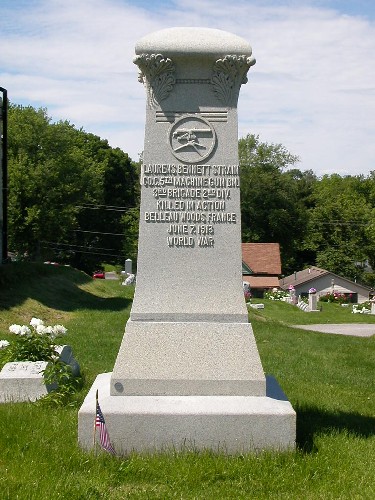
One of the reasons I liked Mark so much was that he never teased me, not even in high school when he could have. I mean, even Morgan teased me, and he was definitely way below me in the social pecking order. So, when Mark and I were put together in our Home Ec group, of course I expected him to be a jerk, because teenaged boys just are. Especially boys who were wild like Mark and skipped class and smoked marijuana and just generally didn't behave themselves. Mark was particulary brazen about being bad--not only did he skip Home Ec class on a regular basis, he parked his Camaro in plain sight of our classroom windows so the teacher could see him sitting out there getting high.
So, a couple years later, when Shawn told me she was dating Mark Brazil, I was incredulous. "Mark? Brazil?!! Are you nuts?!" She told me he was completely reformed, he was a nice guy, settled down, dependable. Well, he was a nice guy before, we had a blast making a taco salad dinner for our final Home Ec project, but I was dubious, because, hey, he was a complete stoner. The first couple times I went out with them, I kept expecting him to say something mean to me, just because he could. And he never did. And he never had, in the twenty-one years I've known him, he was always nice. Nice to me, nice to Shawn.
This isn't how it's supposed to be. Shawn and Mark are always supposed to be there when I go home. I mean, I was supposed to spend time with them next week, it was all arranged, and it's just not possible that it's not happening. Shawn and Mark were supposed to be there when we move home in the next couple of years, and we were supposed to spend the next twenty years getting together, sitting on the porch, and discussing the alfalfa crop. We're supposed to grow old together.
I completely called my mom a liar when she called to tell me. I was telling her, "You've got the wrong person, it must be his dad," and telling her she got the name wrong. And she started reading it out of the paper to me, "Mark F. Brazil, 38, Tonasket," and even then, I was sure she was wrong. She had to be wrong. She had to be.
And I should be there right now, I really should. Shawn's my best friend, well, now my only friend, from my hometown, and how can I not be there? I tried to find a flight that would get me there and back, but couldn't. I really did try, but I couldn't make it work out. And I really, really should be there. Shawn has been there for me so many times, she really kept me from killing myself in high school, and now here I am all the way across the country, and what good is that doing us? And I hate myself for not calling last week. I meant to, and I just didn't get around to it, and now it's too late and I fucking hate myself for not calling.
I felt a little better after I finally talked to Shawn, and she pointed out that she won't need me so much at the funeral, there will be hundreds of people there. It's later she'll need me, and then I will be there. I feel like I'm just sitting here, waiting for Thursday to come so I can get home and see Shawn and the baby. I could hear Marsie fussing while we talked. Shawn said she was okay the first day, but the second day, she started fussing and saying "Da da," so that just sucks, and I don't know how Shawn can bear it. Mark can't be gone, Marsie is only nine months old, and it just isn't supposed to be this way.
Shawn seems to be holding up pretty good, she says she has to because of Marsie. She can't kill herself because then some nutcase relative would end up raising her daughter, and she can't let that happen. That was such a brutal phone call to make. The first time I called, I talked to her sister, which was a little surreal, but then I finally talked to Shawn. She says people call to say they're sorry, and then she ends up comforting them. I just...I'm trying not to think about it, what it must have been like, how horrible it must have been. She said...christ....it took him about a minute to die, but it felt a lot longer. She did everything she could, she's an EMT, and then they worked on him for an hour at the hospital, but they couldn't bring him back. She said she knew right away that he was gone, before the ambulance even got there, and that the worst part was that the last memory she'll ever have of him is the look of terror in his eyes.
Morgan feels awful, probably even guiltier than I do. He's trapped in Jersey until September 1, he can't quit his job until then otherwise he loses all his insurance and benefits. He's in bad shape, he is feeling maybe even guiltier than me, wondering why he didn't quit his job a month sooner, why doesn't he quit now so he can get home? He and Mark had all these plans for September after he moved back home, and now everything's different.
There probably were hundreds of people at the funeral today. Shawn's lived in Tonasket all her life, worked at Al's for 1/2 her life as a checker or store manager, and knows everyone. And everyone knows her. Plus all her relatives, and all Mark's. Plus Mark was a firefighter, so all the firefighters and ambulance and hospital people will be there. I don't think the church will be able to hold them all. My mom said she would go for me, so I feel a little better about that.
I knew it was bad when my mom called and left a message for us. She said she would keep Carl off the modem until I called back, and that means it's serious. On the other hand, it also meant that my father hadn't died because surely Carl wouldn't be playing online games if Dad had just died. It's amazing all the thoughts that can race through your head in the ten seconds between listening to a phone message and calling back.
So, mostly I'm just waiting to go home. I think I'm mostly okay, at least when I'm busy with something. We went out this evening because we'd already made arrangements and paid our money, etc., and I was okay while we were busy eating, but once the music started, my mind was free to wander, and then I was crying again. I guess it will be this way for awhile. Just when I think I'm stable, and let my mind start to work, it comes around on me and I have to pull myself together again.
I just want to go home.
Thursday, December 06, 2001
Went to New York on Thursday. Got up hyper early and got to the airport two hours ahead of our flight. Good thing we did, because our flight was canceled, but we were there early enough to catch a 8:30 flight. Got into New York around 11:00, grey and raining. Took a crowded van ride from La Guardia through the tunnel at Queens to Manhattan. We stayed with a Kinsey patron. He took us around to the galleries in the Chelsea area after lunch at East of Eighth. I wasn't feeling very good and thought I might faint. After he left to go back to his home in Long Beach, Catherine and I did some shopping at Whole Foods, went back to East of Eighth for a drink and dinner, then went to see the Harry Potter movie.
Friday we got up early, did a lot of walking. Took the subway to the MoMA, decided to skip it and went to the American Craft Museum instead. Then we walked around, went to Rockefeller Center to see the tree and skating, saw the GE building, St. Patrick's, St. Bartholomew's, the Waldorf-Astoria, the Chrysler building, and various other buidings. Took a walk in Central Park, had a pizza at the wild animal place, watched some skating at Wolman Rink, then walked up to go to Strawberry Fields. Media circus. Walked around the Dakota. Went back to the Chelsea area, had dinner across the street from Madison Square Garden.
Took Catherine's slides up to Houston street, walked around before going to the gallery. Sat through the gallery panel. Very rude people, very hot and stuffy. Nice to see Bronwyn. We went out to drinks with Bronwyn and two of her friends after the panel talk.
Saturday we went down to see the Woolworth Building, and went to Ground Zero. Don't feel like writing about it.
After that, we met our hosts and went up to 91st street for lunch. Then to the Guggenheim, which was disgustingly painted black. Dinner at a nice Chelsea Japanese restaurant.
Up early, took a very expensive car ride back to La Guardia. Noticed how close Flushing Meadows is to the airport.
Addendum, 6 months later:
I still don't feel like talking about visiting Ground Zero. I keep holding it close to my chest, for the past six months, I've only taken it out when I've been by myself, usually in the car on the way up to Indy for hockey practice. I keep thinking that if I just let enough time pass, I can tell someone what happened while I was standing there, but I just can't. I haven't even talked to Catherine about it, except for about 15 seconds soon afterward. I wanted to talk to Linda about it, but couldn't bear to even start.
Here's the thing. I never break down in public. Never. I can hold it together better than anyone I know. And I didn't break down in New York, either. I do, however, cry about the whole thing every time I go to Indy, sometime after the 45-50 minute mark in the drive, when I'm by myself and no one can touch me and no one can see me and no one will hear me. It's not like I'm hoarding this pain during the week, or that it's on my mind all the time. It's just that given enough time and privacy, things eventually work themselves to the surface.
Anyway, standing there, well, kneeling because I was right at the barrier and there were people behind me and I didn't want anyone to push against me to see around me, that's probably the closest I've ever come to breaking up with people around me. And it wasn't crying breaking up, it was worse. If I had let go at all, I would have been screaming, because that was what was going on in my head. Every time the wrecking machine knocked down another chunk, I just wanted to scream, tell them to stop it, they can't do that, all those papers flying in the air belong to somebody, they have to stop, they could be smashing a body, they have to stop, they have to stop. It was like...boom and I needed to scream. It was deafening inside my head, and I was terrified I was going to have to actually scream, and....just how fucking stupid is that?
Catherine had a completely different reaction to everything, she cried almost immediately, for different reasons, I think. At least, there was nothing familiar in what she was saying to me as I was trying to comfort her. And I want to know where are the people who experienced the same thing I did, the ones who were right on the brink of insanity?
I don't want to share this with anyone. I don't want anyone to devalue my experience, either claim they know how I must have been feeling, or suggest that maybe I was over-reacting. Because I have never felt anything like that in my entire life--I don't go insane over nothing, and I've never screamed in my entire life. And I don't know how to explain how the thud of the wrecking ball ricocheted off my breast bone and forced its way up my throat. I'm glad I didn't scream, but if I had stood there for even 10 more seconds, I'm afraid I wouldn't have been able to stop myself.
Subscribe to:
Posts (Atom)


 Posts


